You've cleaned that shower glass three times this month. You used the spray. You used the squeegee. You found the trick someone posted online with white vinegar and a microfiber cloth. For about four days, the glass looked decent. Then the haze came back: white, filmy, spotted, and clinging to the surface like it never left.
Here's the thing: it's not your cleaning routine that's failing you. It's your water.
Redmond's municipal water consistently tests at 180-250 milligrams per liter of calcium carbonate, making it one of the hardest water supplies in the state. If you've invested in
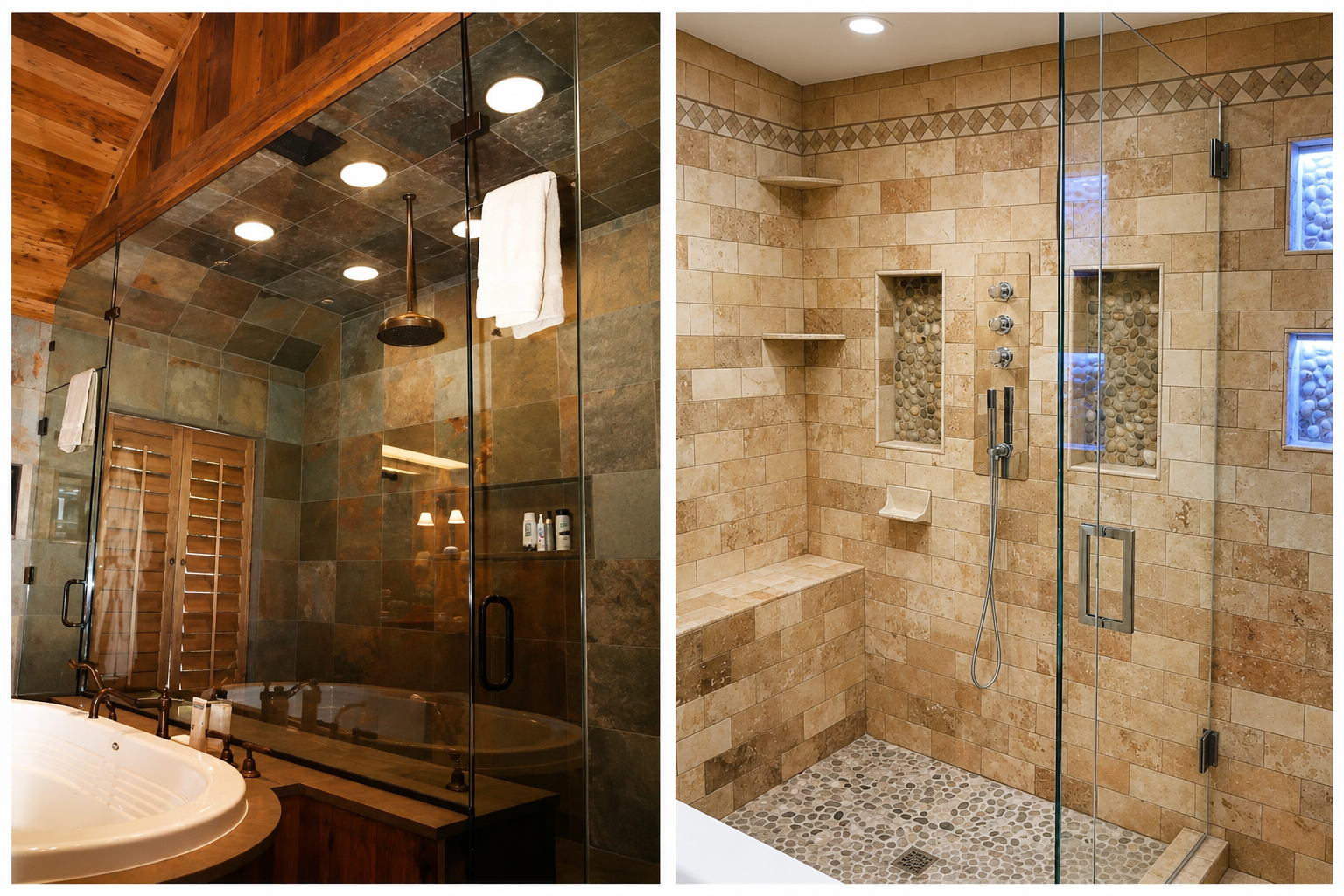
custom shower glass installation in Redmond and can't seem to keep it looking the way it did the day it was installed, understanding what's actually happening to your glass is the first step toward permanently fixing it.
Why Redmond Shower Glass Seems Impossible to Keep Clean
Central Oregon sits on a volcanic plateau, and that geology shapes everything about the water that comes out of your taps. The Deschutes River and the regional aquifer systems that supply Redmond both carry naturally high concentrations of dissolved calcium, magnesium, and silica, minerals that leach from the volcanic rock over millennia and end up flowing through your showerhead every morning.
When that water hits your glass and evaporates, it doesn't take the minerals with it. They stay behind, and they do it thousands of times a year:
every shower, every rinse, every splash.
The result is a slow, invisible accumulation that homeowners almost always misidentify. What looks like soap scum, and what most cleaning products are formulated to remove, is often something much more stubborn: a layered mineral deposit that has partially bonded with the glass surface itself.
Cleaning products that cut through soap scum are working against fatty acid residue. They are not designed to dissolve calcium carbonate bonded to silica-etched glass. This is why the spray-and-wipe routine works for a few days, then loses the battle completely.
What Hard Water Is Actually Leaving Behind
There are three distinct layers of buildup forming on shower glass in hard-water areas, and each behaves differently.
- Calcium carbonate scale is the white, chalky deposit most people recognize as limescale. It's mildly water-soluble and responds reasonably well to mild acids like white vinegar or diluted CLR. This layer cleans up temporarily and gives homeowners the false impression that the problem is solved.
- Magnesium scale bonds slightly differently and tends to appear as a gray or brownish residue on shower hardware and grout before it shows up on glass. It's more resistant to standard acidic cleaners and often goes unnoticed until the deposits become significant.
- Silica scale is the most damaging of the three. Unlike calcium compounds, it doesn't dissolve in acidic solutions. It adheres to glass at a near-molecular level, filling in the micro-surface texture of the glass panel and creating a film that no standard household cleaner can fully remove. Over time, that silica film becomes the foundation for more calcium and magnesium to stack on top of, and the whole deposit system reinforces itself.
Redmond's water supply is classified as very hard by the U.S. Geological Survey, which means every Central Oregon shower is operating in a high-mineral environment by default. The volcanic geology that makes this region so visually stunning is, in a very direct way, the reason your shower glass never seems quite clean.
Why Some Shower Enclosures Fail Faster Than Others in Central Oregon
Not all shower glass ages the same way under hard water conditions, and the reason comes down to installation decisions that most homeowners don't realize they're making when they choose a shower enclosure.
Cheaper shower glass, typically 3/16-inch annealed or tempered glass installed with minimal hardware, has a surface quality that allows mineral deposits to begin etching the glass within 1 to 2 years in a hard-water environment. The glass isn't defective. It just wasn't specified or treated for Central Oregon water conditions.
Here's what most people don't know: tempered glass, which is the safety standard for all shower enclosures, has a micro-textured surface created during the thermal tempering process. Those micro-variations are invisible to the naked eye, but they're exactly where silica and calcium begin to accumulate. Without a surface treatment applied at installation, those pores fill in, the glass loses its original clarity, and no amount of scrubbing reverses it.
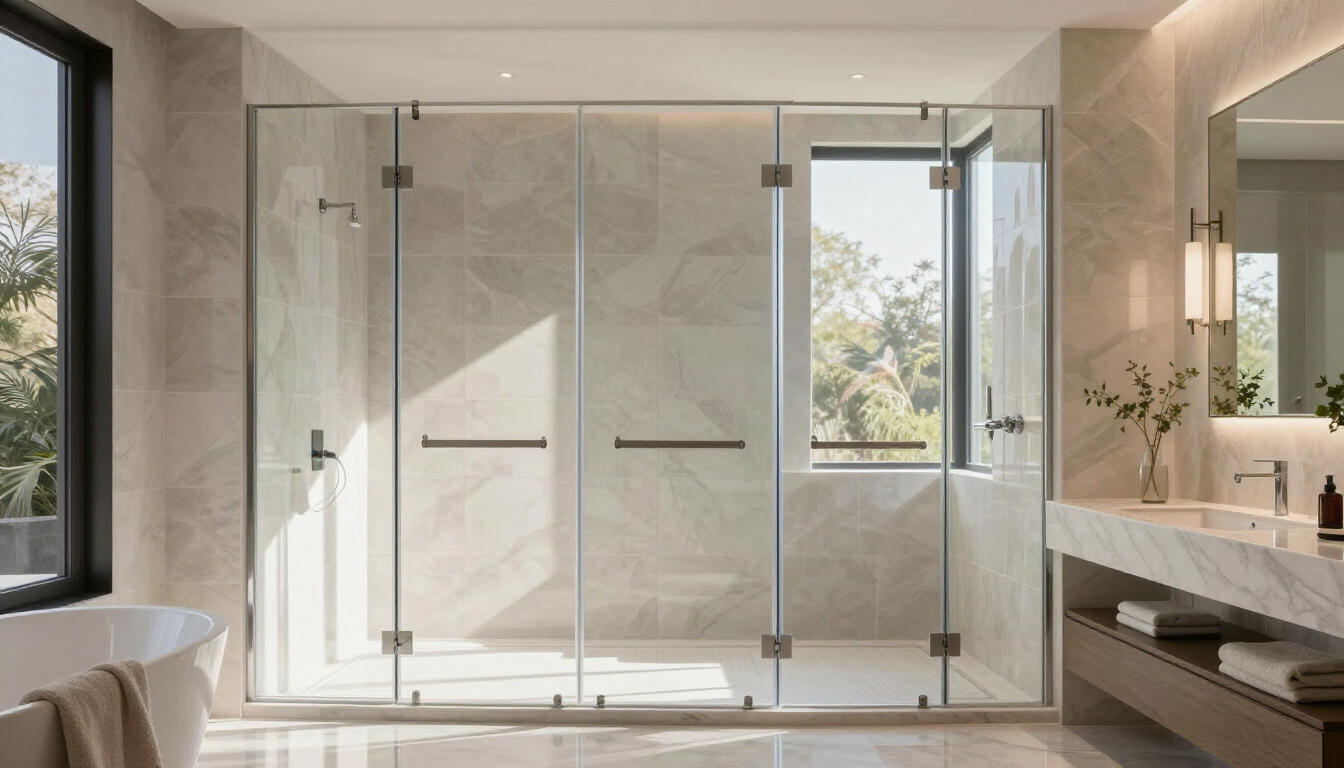
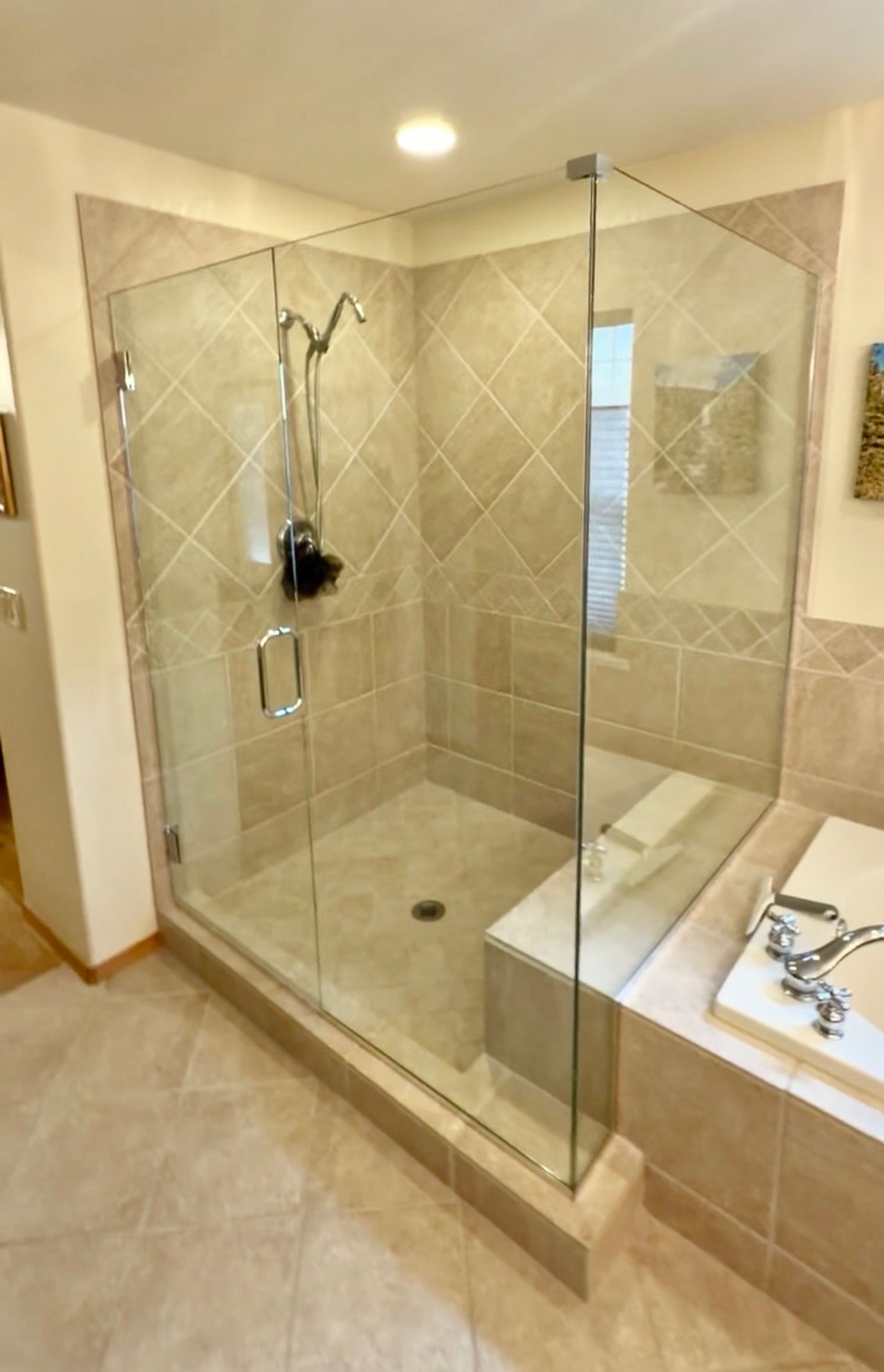
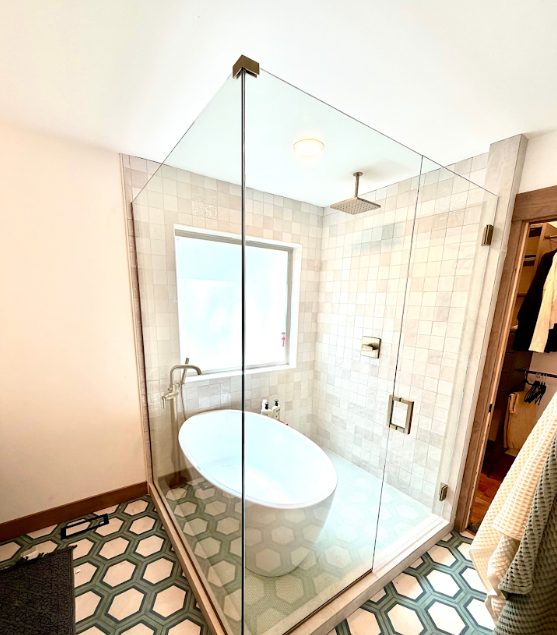
The way water drains off the glass also matters enormously. A frameless shower enclosure that's been engineered with the correct slope, door-sweep contact, and hardware tension will shed water more efficiently, reducing the contact time between hard water and the glass surface. A poorly installed enclosure holds water in place, and that standing water is exactly where long-term mineral damage begins. Following the right shower glass care routine for Central Oregon homes matters, but that routine is far easier to maintain when the enclosure was designed to cooperate with it from the start.
How Glass Coatings Change the Long-Term Equation
The most impactful change a Central Oregon homeowner can make to their shower glass maintenance situation isn't a new cleaning product. It's a professional-grade hydrophobic coating applied at installation or, in some cases, professionally applied to existing glass.
Hydrophobic coatings work by filling in the micro-surface texture of the glass with a nano-barrier that prevents water from spreading across the panel. Instead of sheeting across the glass and evaporating in place, water beads and runs off, taking the dissolved minerals with it rather than leaving them behind. The chemistry is straightforward in a way that spray-and-wipe never could be: you're not trying to remove what's already bonded to the glass. You're preventing the bond from forming in the first place.
The most common professional-grade options used in quality shower enclosure installations are oleophobic and hydrophobic silicone-based coatings. When applied to fresh glass, they significantly extend the clean appearance of a frameless enclosure, especially in hard-water markets like
Redmond, Bend, and Sisters, where the water's mineral load makes standard maintenance less effective from day one.
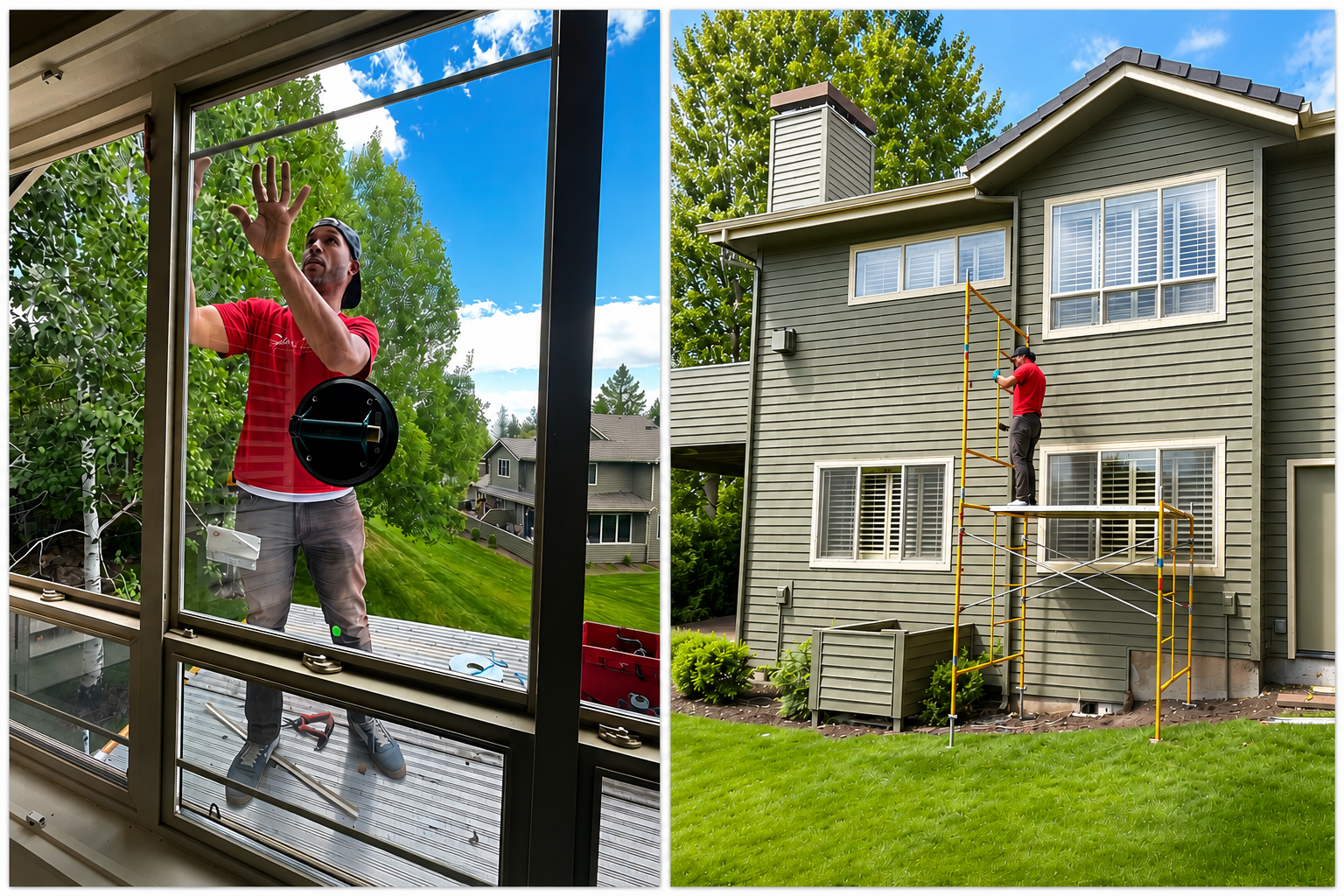
The coating doesn't eliminate maintenance. Please remember to squeegee after each shower and do a monthly deep clean. But the frequency and effort required drop considerably, and the glass holds its original appearance far longer than an uncoated panel would under the same water conditions. For anyone researching residential glass replacement in Redmond, it's worth understanding what surface treatment options are available before committing to an installation.
What Custom Shower Glass Engineering Actually Looks Like in a Central Oregon Home
When a glass contractor understands the local water environment, it changes how they specify and install a
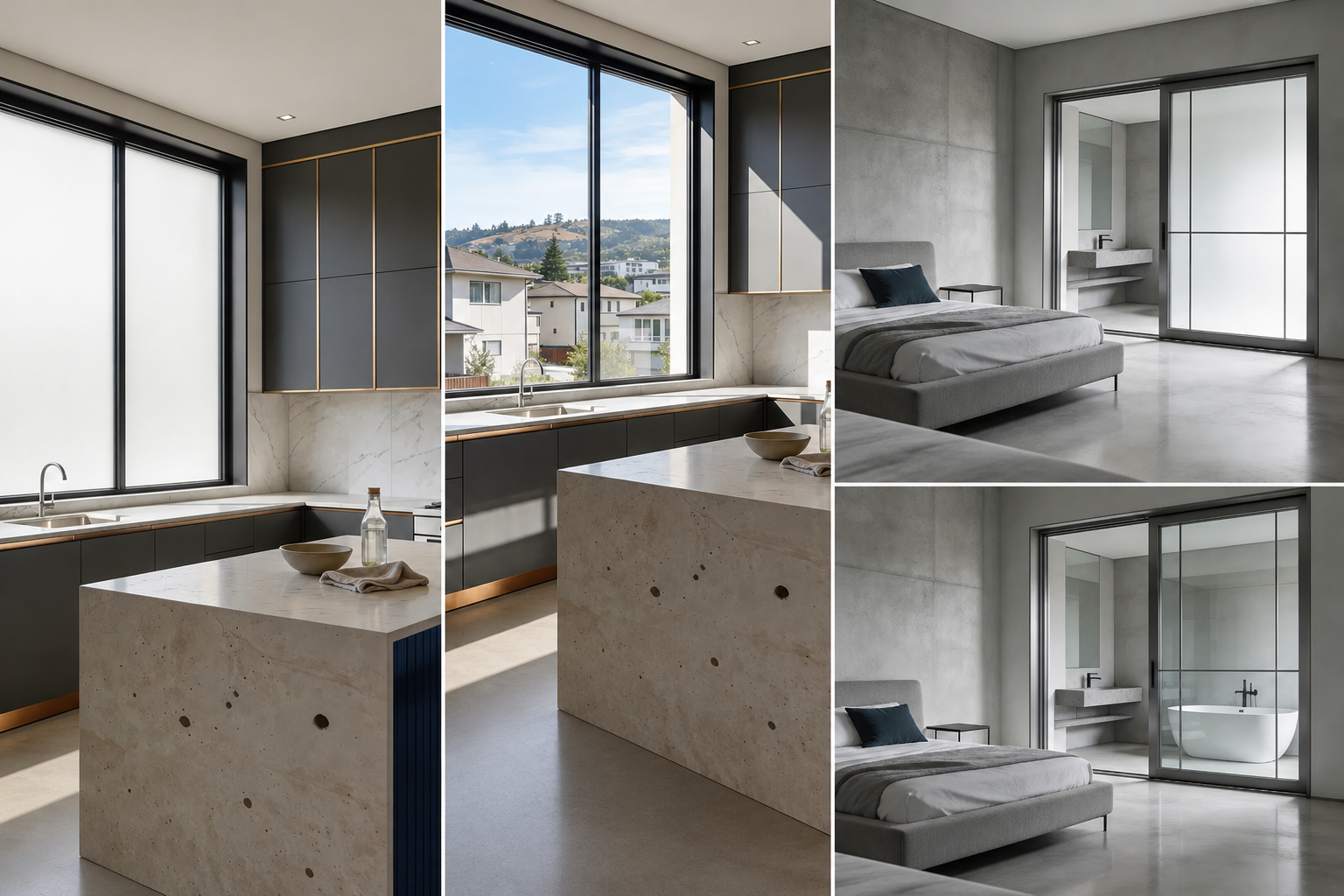
shower enclosure. It's not a dramatic difference from the outside. The finished product looks the same as any well-installed frameless shower. The decisions that matter happen during the design and specification phase, long before installation day.
- Glass thickness. Thicker panels, specifically 3/8-inch and 1/2-inch tempered glass, have a more consistent surface quality than thinner options and handle the thermal variations of Central Oregon's high desert climate more reliably. The High Desert regularly swings 40 degrees between overnight lows and afternoon highs, and that thermal stress affects glass differently depending on thickness and installation method.
- Hardware quality. Stainless hardware with sealed mounting points doesn't give mineral-laden water a place to sit and concentrate around connection points. Corroded or low-quality hardware accelerates the accumulation of visible deposits and eventually compromises the enclosure's structural integrity.
- Slope and drainage. A properly engineered frameless shower floor slopes correctly to the drain, and the glass panels are plumbed and positioned so that water runs away from the bottom of the door rather than pooling against the seal. It's not complicated engineering, but it's the kind of detail that can be overlooked when a contractor is installing volume rather than building something designed to last in the actual environment where it will operate.
The Problem Isn't Dirty Glass. It's a Hard Water Environment With the Wrong Glass System.
If you've been scrubbing your
Redmond shower glass every weekend and wondering what you're doing wrong, the answer is almost certainly nothing. You're working against a water supply with one of the highest mineral concentrations in Oregon, which is applied daily to glass that wasn't designed to handle it.
The right response isn't a better cleaning product. It's an enclosure designed for the environment, which means addressing all of the following:
- Correct glass thickness for Central Oregon's thermal conditions
- A professional hydrophobic coating applied at installation
- Quality stainless hardware with sealed mounting points
- Installation precision that accounts for drainage and water contact from day one
That's the conversation Glass Daddy Redmond has with homeowners throughout Redmond, Bend, Sisters, and the surrounding region. The goal isn't to sell a cleaner or a quick fix. It's to build glass systems that look good and stay that way in the specific conditions Central Oregon produces.
Ready to Stop Fighting Your Shower Glass?
If you're dealing with hazy, spotted, or etched shower glass, or if you're planning a new bathroom and want to get the installation right the first time, Glass Daddy Redmond is here to help.
Schedule a free shower glass consultation in Redmond, and we'll assess what you're working with and what options make the most sense for your home and your water conditions.
Or if you're starting from scratch, build your custom shower with Glass Daddy Redmond and design an enclosure engineered for Central Oregon from the beginning.
Glass Daddy Redmond 2160 SW Badger Ave #110, Redmond, OR 97756 (541) 527-7080