Steam Showers in Madras, Oregon: Why the Enclosure Rules Change
Why a Standard Shower Door Will Never Hold Steam, and What It Takes to Build One That Does.
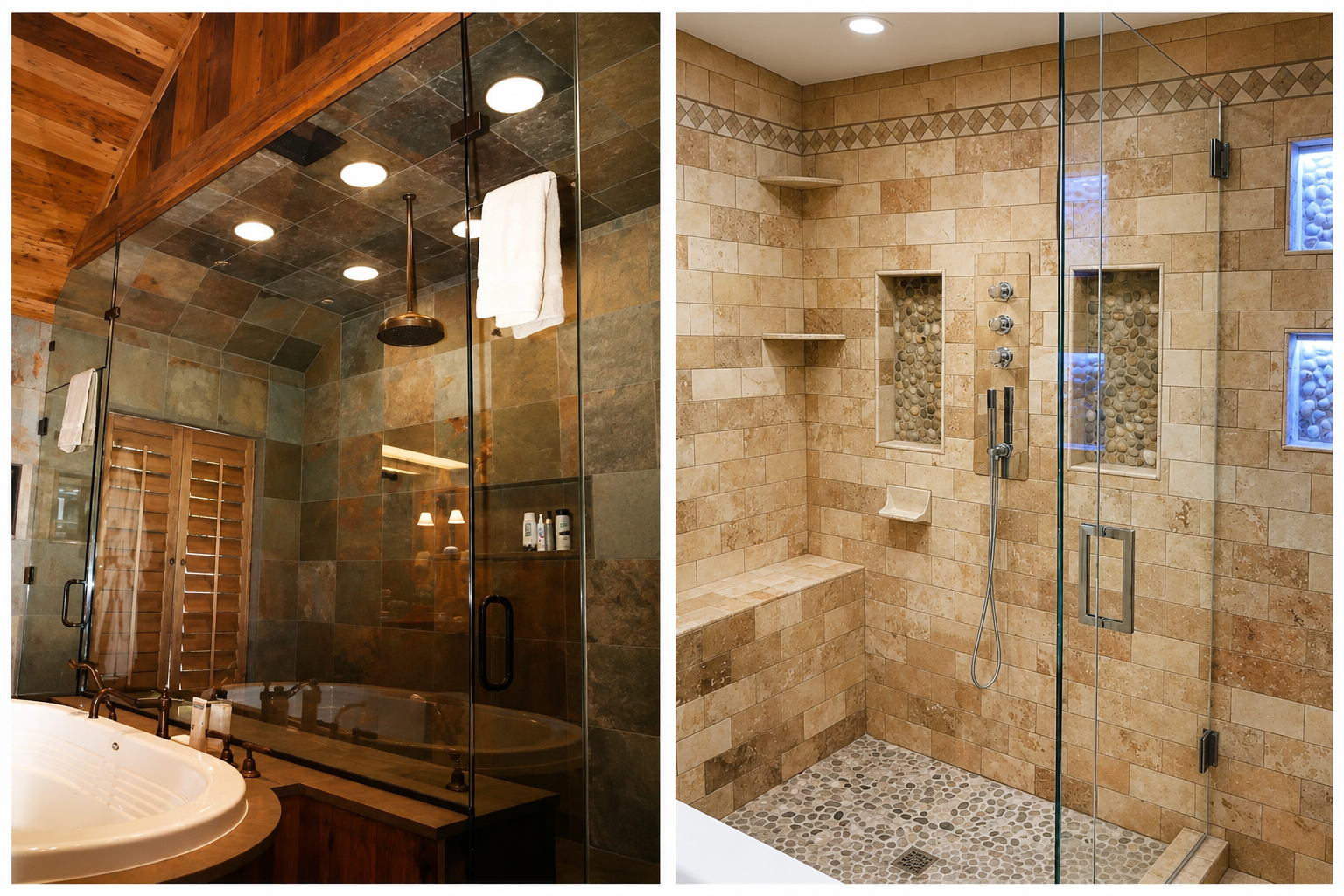
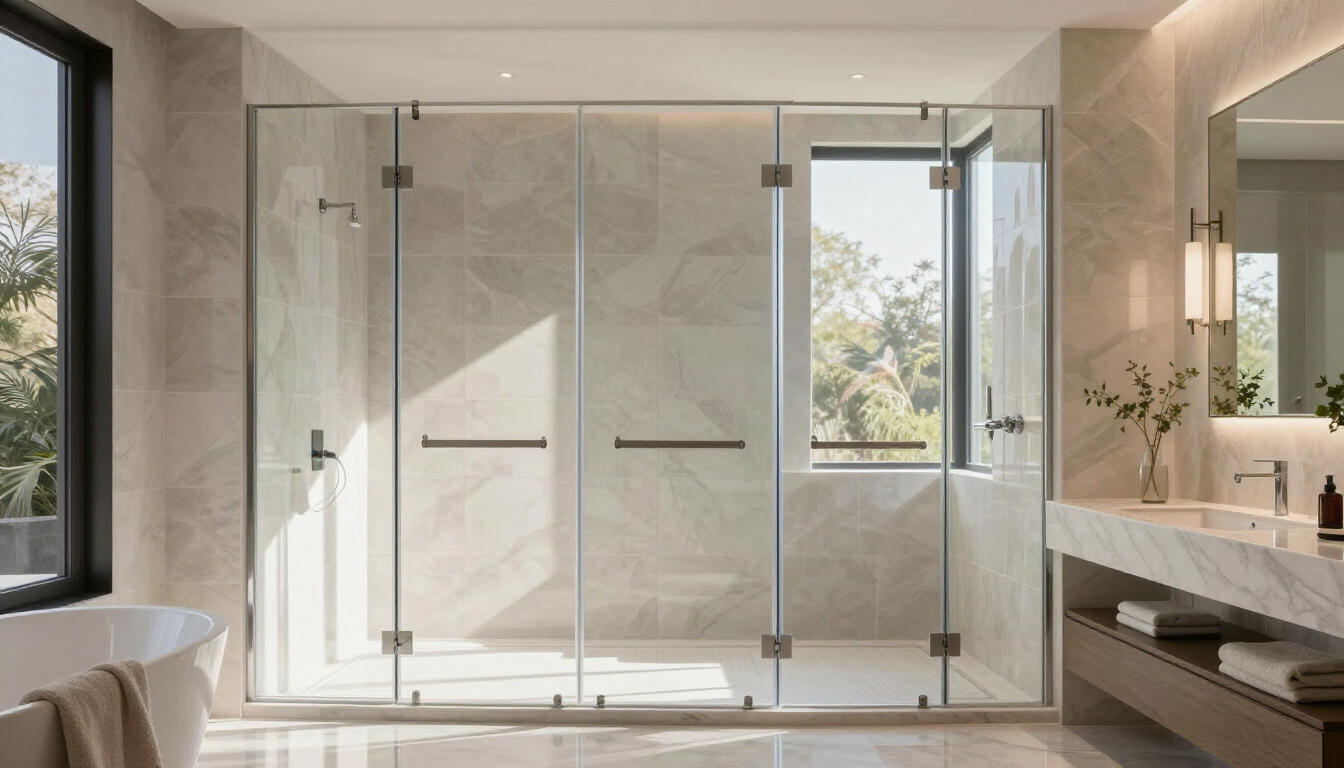
A steam shower enclosure in Madras, Oregon, has to seal from floor to ceiling, which is the single biggest difference between a steam shower and a standard one. Steam rises and escapes through any gap, so the glass runs full height, the door uses a compression gasket instead of a magnetic strip, and a transom panel handles ventilation. Glass Daddy Redmond fabricates and installs custom steam enclosures across Jefferson County with free in-home measurements.
Most homeowners in Madras start this project believing a steam shower is a regular shower with a generator added to it. That assumption is where budgets get broken and where installations fail. The generator is the easy part. The enclosure is where the engineering lives, and almost everything you know about a standard shower door stops applying the moment steam enters the picture.
This guide walks through what actually changes, why it changes, what it costs in Central Oregon, and how to tell whether the contractor bidding your project has built one before.
What Makes a Steam Shower Enclosure Different From a Standard One
A standard shower enclosure manages liquid water. A steam shower enclosure manages vapor. Those are two very different physics problems, and the hardware that solves one does not solve the other.
Splashing water travels down and sideways. A frameless enclosure with a small gap at the top and a quarter-inch of daylight at the hinge handles that perfectly well, because water is not trying to climb. Vapor behaves the opposite way. It rises, it pressurizes slightly, and it will find every unsealed junction in the assembly. A gap that is invisible in a standard shower becomes the reason your steam session never gets above lukewarm.
Here is what that means in practice for a steam shower installation in Madras:
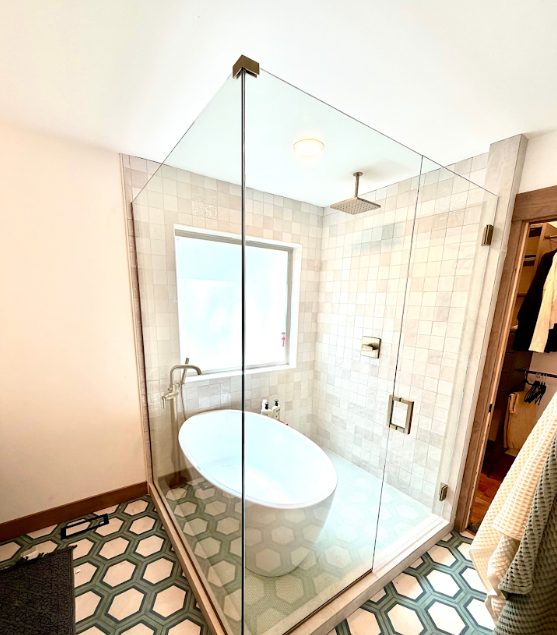
- The glass runs from the shower floor to the ceiling rather than stopping at seven feet
- The door seals on all sides with a continuous compression gasket
- Fixed panels are sealed to tile and walls with non-porous silicone rather than left with a shadow gap
- A transom panel above the door provides controlled ventilation after the session ends
- Hardware and any framing must be corrosion-resistant, typically stainless steel or anodized aluminum
Each of those items adds cost and adds labor. None of them are optional. A steam enclosure that skips any one of them is a standard shower with an expensive generator attached to it.
Why Full Height Glass Is Not Negotiable
The most common bid you will see from a general glass shop treats a steam shower as a taller version of a normal job. They quote the same 3/8 inch tempered panels, run them to 84 inches, and call it done.
Steam does not cooperate with that approach. The vapor collects at the top of the enclosure first, and if the glass stops short of the ceiling, the entire volume above that line becomes the escape route. The generator runs longer trying to reach temperature, the bathroom outside the enclosure gets humid, and the moisture that should have stayed inside the tiled cavity migrates into drywall and ceiling assemblies where it causes real damage.
Running glass to the ceiling solves the containment problem but creates a new one. A fully sealed glass box does not dry out on its own. That is what the transom is for.
The Transom Panel and Why It Matters
A transom is a narrow panel of glass set above the door, and on a well-built steam enclosure it pivots. During the session it stays closed, and the enclosure holds vapor. Afterward you crack it open and the space vents and dries.
Without a transom, you have two bad options. You can leave the door standing open into the bathroom, which is awkward in the smaller bathroom footprints common in older Madras homes, or you can leave the enclosure sealed and wet, which is how mildew starts.
Planning for a transom is not something you do at the end of a project. The upper wall needs reinforcement during framing so the transom hardware has solid backing to bite into, and that backing has to be installed without cutting through the vapor membrane behind the tile. This is the single most common sequencing mistake we see, and it is why we ask to be involved during the framing stage rather than after the tile is finished.
The Door Is Where Most Steam Showers Fail
Steam shower doors in Madras, Oregon have to do something a standard shower door never attempts: form a reliable vapor-resistant seal every single time somebody closes it. Standard magnetic strips and basic rubber gaskets will not accomplish this. Steam-rated doors use continuous compression gaskets, typically silicone or EPDM, that compress against the jamb and create an actual barrier.
The hinge matters just as much. On a steam-rated door, the hinge is encased so vapor cannot travel through the pivot point. Standard frameless hinges leave that path wide open.
One detail surprises people. Many steam enclosure designs intentionally leave a small gap at the bottom of the door, roughly a third to a half inch. That is not sloppy work. It allows cooler air to enter low, which improves steam density and circulation inside the enclosure. Everything above that gap seals tight. Everything at the threshold breathes on purpose.
If you are getting quotes for shower door installation and the bid does not specify gasket type, hinge sealing, and threshold detail, the contractor is quoting you a standard door. Our steam-rated shower door installation in Central Oregon always specifies those three details in writing.
Glass Thickness, Type, and Hardware Specifications
Steam enclosures carry more glass, more weight, and more thermal cycling than a standard shower. The specifications reflect that.
Here is how steam specifications differ from a standard shower, component by component.
Glass thickness. A standard shower uses 3/8 inch tempered. Steam enclosures use 3/8-inch or 1/2-inch tempered glass, depending on panel width.
Glass height. Standard glass stops at 72 to 84 inches. Steam glass runs full ceiling height, typically 90 to 96 inches.
Door seal. Standard doors use a magnetic strip or basic vinyl. Steam doors require a continuous silicone or EPDM compression gasket.
Hinge. A standard frameless hinge leaves the pivot point open. A steam hinge is vapor-encased and corrosion-resistant.
Panel to tile joint. A shadow gap is acceptable on a standard enclosure. Steam panels must be fully sealed with non-porous silicone.
Ventilation. Standard showers need none. Steam enclosures need an operable transom panel.
Hardware finish. Any finish works on a standard shower. Steam requires stainless steel or marine-grade.
All shower glass we install is tempered safety glass meeting ANSI Z97.1 and CPSC 16 CFR 1201 standards, which are code requirements for glazing in wet locations, not a premium upgrade. Tempered glass is roughly four to five times stronger than annealed glass of the same thickness, and when it does break, it fragments into small dull pieces rather than shards.
For steam applications, we generally recommend 1/2 inch glass on any panel over thirty inches wide. The added rigidity keeps the panel from flexing against its seals as the enclosure heats and cools, which is the failure mode that eventually breaks the vapor barrier on lighter glass.
Low-iron glass, sold under names like Starphire, is worth discussing specifically for steam showers. Standard clear glass carries a green tint at the edges that becomes much more visible on tall, full-height panels. On a 96-inch run of glass, that tint is noticeable. Low iron adds roughly 15 to 25 percent to the glass cost and removes it entirely.
What Steam Shower Enclosures Cost in Madras and Jefferson County
Pricing for custom steam shower glass in Madras depends on the size of the opening, the glass thickness, the transom configuration, and the hardware finish. These are realistic installed ranges for the enclosure itself and do not include the generator, tile work, plumbing, or electrical.
- Single door with fixed panel, 3/8 inch glass, with transom: $3,200 to $4,800
- Single door with two fixed panels, 1/2 inch glass, with transom: $4,500 to $6,800
- Neo angle or corner steam enclosure, 1/2 inch glass: $5,500 to $8,500
- Low iron glass upgrade: add 15 to 25 percent
- Operable transom instead of fixed: add $400 to $900
For comparison, a standard frameless enclosure of similar footprint in Central Oregon typically runs $1,800 to $3,500. The difference is not markup. It is taller glass, heavier glass, specialized gaskets, corrosion-resistant hardware, and considerably more precise installation labor.
Budget separately for the generator, which generally runs $1,500 to $3,500 depending on the volume of your enclosure, plus licensed plumbing and electrical work. Steam generator installation is not a homeowner project, and Oregon requires licensed trades for the plumbing and electrical portions.
How Madras Conditions Affect Steam Shower Planning
Madras sits at about 2,241 feet in the Jefferson County high desert, and the local climate creates two specific considerations that a contractor from outside Central Oregon will not think about.
The air here is exceptionally dry. Madras receives roughly eleven inches of precipitation a year, and summer relative humidity drops into the thirties and forties. That dryness is part of why steam showers are popular here in the first place. It also means a steam enclosure that leaks vapor into the bathroom is genuinely noticeable, because the surrounding air pulls that moisture away fast and your session never builds proper density.
Winter temperature swings are severe. Overnight lows in Madras regularly drop into the low twenties, with record lows well below zero. A sealed steam enclosure on an exterior wall is effectively an unheated closet in the winter. If the enclosure sits against an outside wall, the exterior wall behind the tile needs proper insulation, and the design should account for the enclosure being cold at startup. This is a real consideration in the older housing stock around downtown Madras and in properties out toward Metolius and Culver.
Hard water is a factor across Central Oregon. Mineral content in the water supply throughout Jefferson and Deschutes counties leaves deposits on glass, and a steam enclosure sees far more condensation cycling than a standard shower. We recommend a factory-applied protective coating on steam glass, and a squeegee habit after each session. That combination makes the difference between glass that stays clear for years and glass that hazes within months.
Shower Niche Installation and Interior Details
While the enclosure is the structural centerpiece, the interior details of a steam shower need the same attention to sealing.
Shower niche installation inside a steam enclosure requires the niche to be fully waterproofed and integrated into the vapor membrane rather than treated as a decorative cutout. The niche floor should slope slightly toward the shower so condensation drains rather than pooling. Any bench should slope the same way.
Glass shelving inside a steam enclosure should be tempered and supported with corrosion-resistant brackets. Chrome-plated brass brackets that hold up fine in a standard shower will pit and corrode under sustained steam exposure.
Mirrors deserve a mention here as well. Homeowners frequently want a mirror inside or immediately outside the steam enclosure, and standard mirror backing degrades quickly under those conditions. Steam-rated and fog-free mirrors use different backing and edge sealing, and it is worth specifying these correctly during the design phase rather than replacing a corroded mirror two years later. Our team handles custom glass and mirror work in Madras and across Central Oregon alongside the enclosure itself, which keeps specifications consistent throughout the bathroom.
If you are still working through configuration options, our Build Your Shower planning resource walks through door styles, glass options, and hardware finishes.
Choosing a Steam Shower Contractor in Madras
Steam enclosures separate experienced glaziers from general installers very quickly. These are the questions worth asking any contractor bidding on your project.
Ask how many steam enclosures they have installed. Not showers. Steam enclosures specifically. The techniques do not transfer automatically.
Ask when they want to be involved. A contractor who says they will come measure after the tile is finished has not planned for transom backing or for the sequencing that a steam enclosure requires. The right answer involves a conversation during framing.
Ask what gasket system they use. A specific answer is a good sign. Vagueness means they are quoting standard door hardware.
Ask about the transom. If the bid does not include one, ask how the enclosure dries out after a session. There should be a clear plan.
Verify licensing. Glass Daddy Redmond holds Oregon CCB license 236893, is bonded and insured, and works alongside licensed plumbers and electricians on the mechanical portions of steam projects.
Ask where the glass comes from. We source tempered and custom-fabricated glass through established suppliers, including National Glass Industries, which lets us hold consistent quality on the oversized panels a full-height steam enclosure requires.
Glass Daddy Redmond has been serving Central Oregon since 2021 with over 10,000 glass repair and replacement projects completed, and our team brings more than a decade of journeyman glazier experience to specialty work like this. We handle custom shower enclosure design and installation throughout Madras, Culver, Metolius, Redmond, Prineville, and Sisters.
Specialty glazing is a genuine part of what we do rather than an occasional exception. We recently became one of the few companies on the West Coast retrofitting CLiC smart privacy glass into existing homes, a project covered in Central Oregon press, and that same willingness to solve complicated installation problems is what steam enclosures demand.
Timeline: What to Expect
A steam shower enclosure in Madras typically follows this sequence.
- Initial consultation and design, ideally during the framing stage. We review ceiling height, transom backing, wall construction, and door swing.
- Template measurement after tile is complete and cured. Steam enclosures are templated, not measured from plans, because tolerances are tight.
- Fabrication, generally two to three weeks for custom tempered panels. Low iron and oversized panels can run slightly longer.
- Installation usually takes one full day for a standard configuration and two for complex corner or neo angle enclosures.
- Cure period of twenty-four to forty-eight hours before first use, allowing the structural silicone to fully set.
Plan for four to six weeks from design approval to first steam session.
Frequently Asked Questions About Steam Shower Installation
How much does a steam shower enclosure cost in Madras, Oregon?
Steam shower enclosures in Madras typically run $3,200 to $8,500 installed, depending on configuration, glass thickness, and transom options. A single door with a fixed panel and transom in 3/8 inch glass generally falls between $3,200 and $4,800. This covers the glass enclosure only and does not include the steam generator, tile, plumbing, or electrical work.
Can I convert my existing shower into a steam shower?
Sometimes, but it depends on what is behind the tile. A steam shower requires a continuous vapor barrier across walls and ceiling, a sloped ceiling, and a fully sealed enclosure. If your existing shower lacks a proper steam-rated vapor membrane, converting it means removing tile and rebuilding the substrate. We can assess whether conversion is realistic during a free in-home evaluation.
Do steam shower doors need to seal completely?
Almost completely. The door needs a continuous compression gasket on the sides and top, with a vapor-encased hinge. Many designs intentionally leave a small gap of a third to a half inch at the threshold, which lets cooler air enter low and improves steam circulation. Everything above that threshold should seal tight.
What glass thickness is best for a steam shower?
We recommend 1/2-inch tempered glass for any steam enclosure panel wider than 30 inches, and 3/8-inch is acceptable for narrower panels. The heavier glass resists flexing as the enclosure heats and cools, which protects the vapor seals over time. All shower glass must be tempered to meet ANSI Z97.1 and CPSC 16 CFR 1201 safety standards.
How tall does the glass need to be in a steam shower?
The glass must run to the ceiling. Steam rises and escapes through any gap above the panels, preventing the enclosure from reaching temperature and pushing moisture into surrounding drywall and ceiling assemblies. Standard shower glass stops at 72 to 84 inches, while steam enclosures typically run 90 to 96 inches.
What is a transom and do I need one?
A transom is a narrow glass panel above the shower door, usually operable so it can pivot open. It stays closed during your steam session to hold vapor and opens afterward so the enclosure vents and dries. Without one, a sealed steam enclosure stays wet, which invites mildew. We recommend an operable transom on nearly every steam installation.
How long does steam shower glass installation take?
Installation typically takes one full day for a standard configuration and two days for corner or neo angle enclosures. The full timeline from design approval to first use runs four to six weeks, accounting for two to three weeks of custom fabrication and a twenty-four- to forty-eight-hour silicone cure period after installation.
Does Glass Daddy Redmond serve Madras and Jefferson County?
Yes. We serve Madras, Culver, Metolius, and the surrounding Jefferson County area, along with Redmond, Prineville, Sisters, and the broader Central Oregon region. We provide free in-home measurements and estimates for steam shower enclosures and all custom glass work.
Ready to Plan Your Steam Shower in Madras?
A steam shower is one of the few home upgrades that genuinely changes how a house feels to live in, especially through a Central Oregon winter. It is also one of the least forgiving installations in residential glass. The difference between an enclosure that holds temperature for a decade and one that leaks vapor into your ceiling comes down to decisions made before the first panel is cut.
Glass Daddy Redmond brings journeyman glazier expertise, Oregon CCB license 236893, and a decade of Central Oregon experience to custom shower and steam enclosure projects. We will walk your bathroom, talk through configuration and sequencing, and give you a straight estimate with no pressure attached.
If you are planning a steam shower, a bathroom remodel, or a complete custom shower build in Madras or anywhere in Central Oregon, get in touch with our team for a free consultation or call (541) 527-7080 and in home measurement.
Recent Posts